If you like this, please support my work.
I watched The Beauty last week and thought it was fine: amusing, a good watch for a late evening. I was struck by a couple of the reviews, which reminded me of a topic I’ve been thinking about a lot: how the world of publishing and criticism in particular has been affected, not always in the best way, by the incursion of former wanna-be academics into mainstream publishing. The short cultural and intellectual histories I present here are just that, short and glancing and even impressionistic, but also true to the course of events. I will be writing more on these issues.
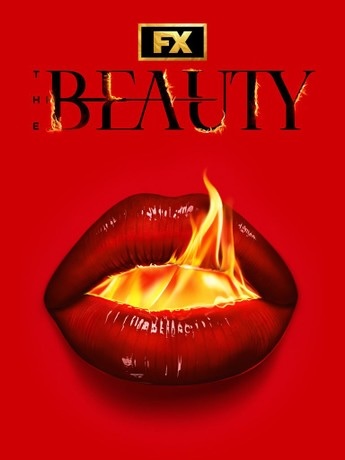
The Beauty is the latest body horror spectacle co-produced by Ryan Murphy, and it is everything we’ve come to expect from a director and producer who has gradually upped the blood and gore in all his shows ever since Nip/Tuck, a show about plastic surgery that gloried in the visceral, bloody details of everything that went into transforming people into the versions they wanted to be. The Beauty has thematic similarities to that earlier series, but describing its plot and characters is challenging because putting it all down in black and white makes one realise how ludicrous all of it is, and how convoluted. (At the time of this writing, only four of the eleven episodes have streamed so far.)
If you like this, please support my work.
In a nutshell:
There is, we are told, a mysterious, sexually transmitted virus of sorts called “The Beauty” that grants stellar good looks and immensely toned and fit bodies to those who absorb it. The transition from what are presented, in conventional terms, as dumpy, undesirable bodies to sleek and beautiful ones is messy and literally explosive as bones break under the skin and blood spurts everywhere. Left behind each time is a sludgy, horrifying mess that looks like a human body turned itself inside out, got eaten by a giant cat, and was promptly vomited back onto the carpet.
Eventually, these new bodies also explode: beauty, as millennia of poetry and now this show remind us, is fleeting. For these unfortunate individuals, there is no quiet death after their gently fading looks are wiped out by wrinkles and sun damage. Instead, they will, at the peak of their pulchritude, actually, literally explode yet again, usually in public after downing gallons of water to quench a mysterious and unbridled thirst. Two FBI officers, Cooper Madsen (Evan Peters) and Jordan Bennett (Rebecca Hall) are deputed to unearth the mystery of what could be both a health hazard and a murder spree. Fortunately for them, these deaths happen in the world’s most elegant capitals—London, Paris, Venice, New York—allowing them to swan through with their diem allowances even if consigned to inelegant and slightly decrepit hotels in which they engage in the kind of sexual relations which are, surely, forbidden by the agency. But it’s all set in or around the new-ish FBI of today, so who, really, cares about rules anymore? Or the fact that copious amounts of sex and nights out dancing between agents might not leave them capable of doing their work with any energy or impartiality? Details, details, silly, silly details.
The Beauty is fine, a good binge-y show to which a viewer might never return—but Murphy doesn’t have to care about that because by now he is guaranteed recurring seasons no matter what, it seems: All’s Fair, his last endeavour, was a much-loathed series about high-powered women playing lawyers, or something, but it was also a ratings success and is due for a second season. Here, his style is all gore and fizz, with incoherent plot lines and unexplained plot points. One of the characters, Jeremy, a virgin incel (played by Jaquel Spivey and Jeremy Pope as the same man before and after infection) is somehow, despite the lack of a job or family money, able to scrounge up the cash to go to a very expensive plastic surgeon, Dr. Dilegre (Jon Jon Briones). Dilegre, supposed to be an absolute magician with plastic surgery, bears extremely obvious scars on his face: a wiser person would take one look and exclaim, “My man, if you can’t fix your own face, how are you going to work on mine?” and run in the opposite direction. Jeremy, instead, hands over even more money after the initial procedure done on him fails to attract women.
But this is also a show about a virus that breaks your bones, turns you inside out and leaves you looking like a supermodel, so perhaps a search for logic is futile.
If you like this, please support my work.
There are obvious cultural references in The Beauty: to a larger obsession with beauty and certainly to the craze for Ozempic as evidenced in a growing number of celebrities who, increasingly, look like humans going through mad cow disease. Recent shots of a rapidly dwindling Kelly Osborne incited so much commentary that she felt compelled to snap back. None of that is to be taken too seriously in a show that is played for a combination of horror, cringe, and laughter. For the most part, critics have been gently amused by The Beauty, mostly shrugging it off as a “wild ride,” as Cristina Escobar puts it. But there are some who seem bent on discovering some deeper, hidden meaning in the show, digging into its depths—or, really, just polishing its surface, because there is not much depth here. I agree with the New Yorker’s Inkoo Kang that the episodes are a bit crammed and not that cohesive, but find the rest of her review overwrought and over-eager to find themes that are simply not there. Acknowledging that it is somewhat scant in weight, she still writes that “The Beauty isn’t just an exercise in chastisement. It also explores another demographic interested in aggressive aesthetic interventions—young, alienated men.” Explores is a loaded word: The Beauty doesn’t really explore any particular theme. It gestures vaguely at some, like the one about women feeling compelled to sculpt themselves into desirable bodies (even an otherwise seemingly uncaring and strong Bennett gets breast implants). But explores? Not really. Vulture’s Roxana Hadidi, usually a restrained critic, spends several paragraphs speculating on a complexity that simply does not exist. She writes,
There are certainly female characters in the series who give into western culture’s demands for how they’re supposed to look, but The Beauty is more fascinated by what the scourge of wellness has wrought on sticky-palmed, women-hating men and how the male-loneliness epidemic is a physically and emotionally ugly thing fueled by HGH, hair implants, and creatine shits as men chase looking like yassified Squidward.
This is such an egregiously overdone interpretation that it feels like gaslighting. There is no such depth in The Beauty, a show that’s not really fascinated by anything, just as it does not explore anything in depth.
While outlets likeRogerebert.com, where Escobar posted her more insouciant take, or The Guardian, where Lucy Mangan refers to it, correctly, as “bingeable Murphy goodness,” are willing to consider The Beauty as emblematic of its genre—body horror—the New Yorker and Vulture strain to explain it as some kind of profound cultural commentary. That’s not surprising, given that the latter two publications are where a certain kind of cultural studies has come to die, dragging its tired, bedraggled and weary self out of the 1990s in search of relevance. I write that as someone who actually got a degree in said subject in that time period, and I still see value in that approach. What cultural studies brought to criticism was the injunction to take all cultural forms seriously, even the most popular ones. Stephen King is today rightly hailed as a great writer and entire courses revolve around him, but there was a time when, as the writer often bitterly pointed out, academics and the literati routinely disparaged his work.
Until cultural studies came on the scene, there was a tendency to not take television shows or “popular culture” seriously either (film studies as an academic discipline was well established by then, and was on the way to becoming altogether too fond of itself). The idea that even gossip magazines or Barbie dolls are worthy objects of serious study seems commonplace to us now, but all of this is relatively recent.
Over the last few decades, as academic jobs have become more scarce, college and university graduates, including PhDs, everywhere flail around looking for ways to keep writing and expanding their scholarship. One natural result, especially with the expansion of web-based opportunities, is that several of them migrate towards non-academic venues that include sites like RogerEbert.com, People, Guardian, lefty magazines like Current Affairs or the more established publications like the New Yorker and Vulture. And this is where the difference in approach comes into focus, and what explains why the latter two felt compelled to invest a fluffy and mindless and mostly fun show like The Beauty with more meaning than its light frame can sustain. There is, somewhere, no doubt, a series that is “fascinated” by a “scourge of wellness,” but this is not it, and there may well be one that explores the theme of alienated men, but that is not The Beauty. The differences in approach we see in the New Yorker and Vulture, as opposed to what we read in the others, can no longer be explained by terms like highbrow or lowbrow: there are just eyeballs now, rent asunder from their brows, targets that must be ensnared as quickly and efficiently as possible. To that end, the New Yorker and Vulture both feel compelled to prove that they are a cut above the rest, able to take even a slightly seedy and fluffy show and imbue it with deep meaning, thus allowing the reader to feel like they have received their money’s worth. You’re not just reading any old review, we are assured, you’re reading the finest intellectual take that elevates even this humble and possibly despicable television show. Critics at such places these days are incapable of reading or viewing cultural productions on their own merits, to take them seriously as and where they are. They cannot distinguish between Succession and The Beauty. That is not to show less respect for the latter, but to indicate that it should be taken seriously on its own terms. Not everything has to be Hamlet and, frankly, even Hamlet—suffocated by centuries of often intolerably wearying criticism—is not Hamlet.
Hadidi in particular twists and turns to make it seem like The Beauty is secretly a set of metaphors for, whatever, contemporary life or something, and wants to prove that it’s a show of “ideas.” It’s not. There are very few ideas here beyond, “What will bring the audience back next week?” And that is fine. Like his Nip/Tuck and American Horror Stories, you should always take Murphy at the surface level and be done with it. That’s not a criticism: I would love to produce something that entertains, is well written, and makes a ton of money. A friend and I have spoken about how much we’d like to write old-fashioned mysteries, like the pocket thrillers you used to be able to find in airport stores, the ones you finished on the plane and left behind for the next passenger. (You can’t leave behind anything anywhere now.)
Instead of shrugging it off, both the New Yorker and New York seem to want to justify reviewing a show like this. It’s as if they think there’s no point in writing about The Beauty unless they can weigh it down with meeeaaaaaning. But sometimes a Ryan Murphy show is just a Ryan Murphy show.
If you like this, please support my work.

The Beauty, created by Ryan Murphy and Matthew Hodgson, is streaming on Hulu and FX. Episodes drop every Wednesday
See also:
A Gauntlet of Lesbians: In Praise of the Middlebrow
Is There a Place for the Small Novel?
Joshua Marston’s Complete Unknown: Or, When Critics Respond To A Woman Who Lives Like A Man
Don’t plagiarise any of this, in any way. I have used legal resources to punish and prevent plagiarism, and I am ruthless and persistent. I make a point of citing people and publications all the time: it’s not that hard to mention me in your work, and to refuse to do so and simply assimilate my work is plagiarism. You don’t have to agree with me to cite me properly; be an ethical grownup, and don’t make excuses for your plagiarism. Read and memorise “On Plagiarism.” There’s more forthcoming, as I point out in “The Plagiarism Papers.” If you’d like to support me, please donate and/or subscribe, or get me something from my wish list. Thank you.