If you like this, please support my work.
As I’ve mentioned, often, and here, I’m very busy with some large projects I need to finish, so I’ll be writing some shorter essays for a little while. These are intended to be thought-provoking glances at issues rather than detailed analyses, and I hope they will incite conversations.
I wrote this one up as a post on Facebook, and thought it would also serve as a brief rumination of sorts. A note on my use of the term “left”: I have, whenever possible, used the term “broad left” to signify a range of ideologies that include liberalism and socialism. At other times, I have tried to indicate that I do mean an actual, Marxist, utopian left (Yes, I believe in creating a utopia). The problem is that the term “left” is a fuzzy one in general discourse these days, and I am trying to reflect that fuzziness, not replicate it. As my regular readers know: I have been writing about and for a left politics for nearly all of my 250 years on this beguiling and bewildering planet. “A Manifesto” lays out my politics more clearly.
What are the “left” structures on which you have depended for your information? For your organising? For analysis? For reporting? For social services? For change?
Now ask yourselves: how do they function? Do you know how they function? Do you know how much your left magazines and journals pay their writers, or even if they do? Why not? Why has that not mattered to you? Does that social justice organisation you like actually work towards real change or does it keep asking you for money by trotting out the trauma stories of its “clients”? Do you ask them questions about what their five year plans are, and what they see as a forward movement, or are they just intent on surviving as the same organisation for eternity?
If you like this, please support my work.
Years ago, when I visited, often, the office of the biggest immigration agency in town, I was always struck—and utterly horrified — by the giant photographs of weeping children that they used to decorate their space. But it’s what got them donors.
When you attend yet another social justice book reading: are you getting any kind of new analysis or are you listening to yet another “resilience” story? Another tale of surviving trauma? About “community”? If you threw, say, six social justice books up in the air and they all fell on the floor with their pages mixed up, would you actually be able to tell if they were six different books?
The left is addicted to crisis and to not actually making real change. If you want to see a different world, don’t just praise “survival”—figure out what actual change might look like. That’s a lot scarier than talking endlessly about “community” and “love.” But it’s necessary.
My biggest concern is that we seem to have become addicted to this state of things and use it to justify more of the same, just as immigration organisations have used immigrant trauma to build themselves up and make themselves indispensable. Just as organisations ostensibly devoted to ending violence insist on forcing their clients to show up on stage to vomit (and, effectively, relive) their trauma stories.
There is so much going on right now that is truly inspiring and hopeful. People are fighting on behalf of strangers, and willing to walk into danger to protect them. The resistance, a word I usually find useless and clichéd because it has long been associated with silly pink hats, seems to have animated itself like a force field that has lain dormant for years.
But what is the world we dream of and hope to build, beyond this current moment? As we fight every day, like relentless if embattled warriors taking on the most repressive and brutal forces, are we taking time out to imagine a different future? What do we dare to destroy before we begin to rebuild?
If you like this, please support my work.
See also: “What Are We Defending?”
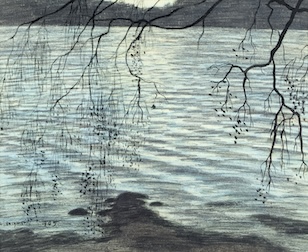
Image: Oscar Bergman (1879-1963), “Reflexer”

Don’t plagiarise any of this, in any way. I have used legal resources to punish and prevent plagiarism, and I am ruthless and persistent. I make a point of citing people and publications all the time: it’s not that hard to mention me in your work, and to refuse to do so and simply assimilate my work is plagiarism. You don’t have to agree with me to cite me properly; be an ethical grownup, and don’t make excuses for your plagiarism. Read and memorise “On Plagiarism.” There’s more forthcoming, as I point out in “The Plagiarism Papers.” If you’d like to support me, please donate and/or subscribe, or get me something from my wish list. Thank you.